
What to Do Immediately After a Flood or Water Emergency
A prompt response after water intrusion reduces damage, prevents structural issues, and lowers future repair difficulty. This guide explains what homeowners should do first, how to assess safety, how to start basic drying, and when professional water damage restoration may be required.
Confirm Home Safety Before Any Action
Safety checks come before cleanup. Water intrusion can create electrical hazards, weaken structures, and contaminate indoor areas. Homeowners should only enter affected spaces when hazards are ruled out.
- Avoid entering flooded rooms if electrical outlets or wiring are exposed
- Shut off electricity in affected zones at the breaker, not at wall switches
- Stay away from sagging ceilings, bowing walls, or floors that feel unstable
- Wear gloves and waterproof footwear if the water source is unknown
- Do not handle heavy, saturated materials alone
Once the area is safe to enter, a general walkthrough helps determine what to address first and whether professional assistance is required.
Report the Water Source and Stop Active Flow
The most urgent task is preventing continued water intrusion. Until the source is stopped, cleanup has limited impact. A quick inspection helps categorize the intrusion.
- Turn off the home’s main water supply if a pipe burst is suspected
- If the intrusion came from the roof, identify ongoing leaks and contain runoff with buckets
- If wastewater or drainage caused the flooding, discontinue use of affected fixtures
- If a sump pump failed, reset its power source if safe to do so
Stopping the flow allows you to manage standing water and begin protecting contents without accelerated saturation.
Document the Damage for Insurance Purposes
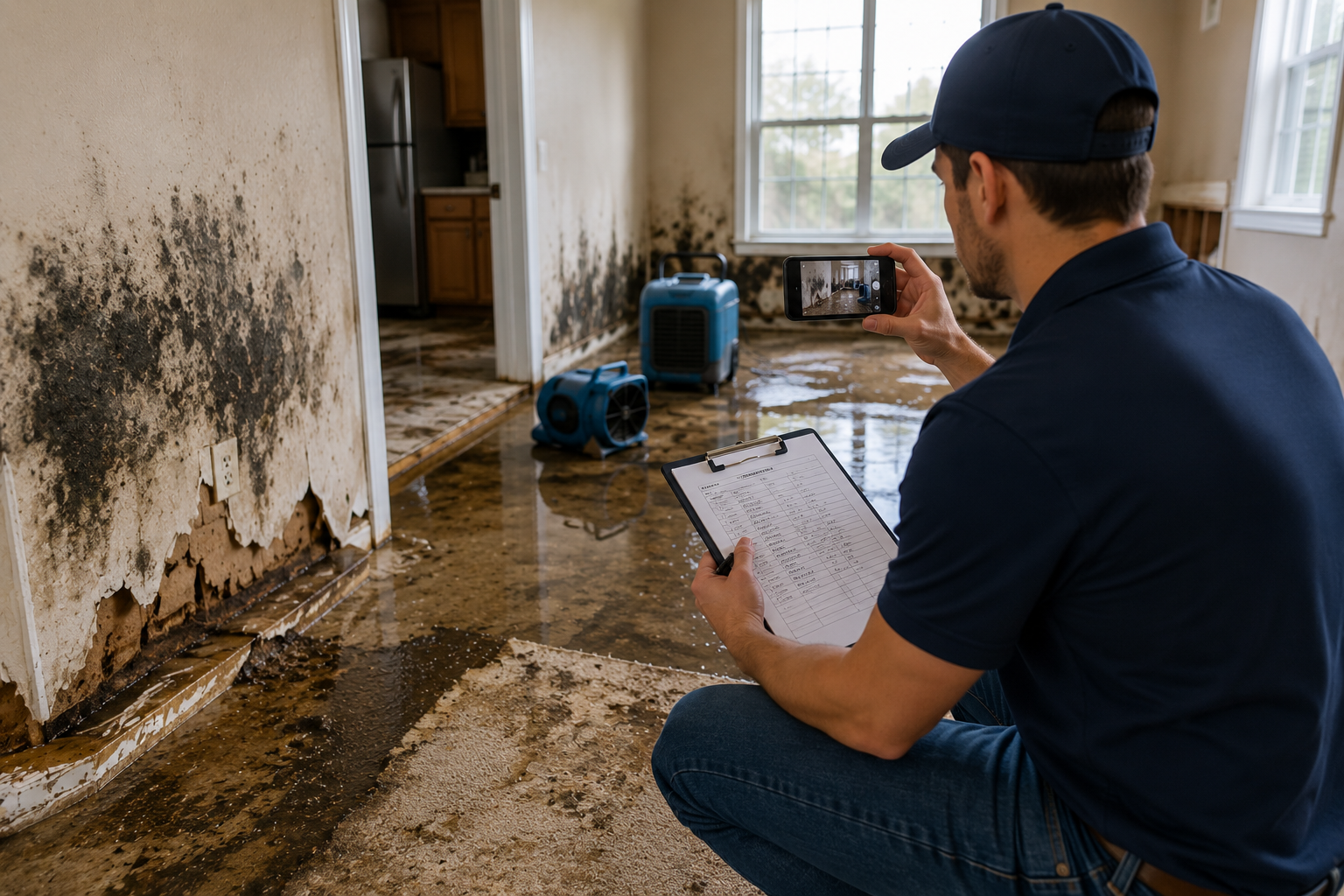
Accurate documentation supports insurance claims, verifies loss value, and prevents disputes. Photographs and notes are most effective when captured before cleanup begins.
- Photograph standing water, damaged walls, flooring, and belongings
- List affected rooms and approximate water depths
- Keep receipts for emergency supplies
- Avoid disposing of damaged property until verification is complete
Documentation provides a record of conditions and guides decisions on what requires replacement versus repair.
Remove Standing Water and Surface Moisture
Standing water accelerates structural deterioration and supports rapid microbial growth. The objective is to remove it quickly using simple tools available to homeowners.
- Use buckets, mops, and wet-dry vacuums on hard flooring
- Wring out saturated rugs outdoors if manageable
- Push remaining surface water toward floor drains where possible
- Keep children and pets away from standing water
Once visible water is removed, surfaces remain damp and still require controlled drying measures to prevent further damage.
Begin Initial Drying and Cross-Ventilation
Opening airflow helps lower moisture levels, reduce humidity, and slow material saturation. Natural ventilation methods are useful while waiting for further evaluation.
- Open doors and windows if the weather allows
- Elevate furniture to provide airflow beneath it
- Use household fans to create directional air movement
- Run a dehumidifier in enclosed spaces
These measures support early drying, but structural cavities, insulation, and subflooring typically require moisture assessment to confirm when drying is complete.
Separate Damaged and Undamaged Belongings
Item separation prevents cross-contamination and helps determine salvage priorities. Water-exposed materials are not equal in recovery potential.
- Move undamaged items to a dry space immediately
- Elevate furniture legs on blocks to reduce absorption
- Keep wet papers and fabrics separate to avoid bacterial spread
- Avoid forcing open swollen drawers or cabinetry
Timely separation reduces loss and supports a more organized assessment of what can be restored.
Pay Attention to Contamination Risks
Not all water is classified the same. Contamination categories help determine suitable handling methods. Greywater and blackwater require greater caution due to pathogen risk.
- Treat overflow from toilets, drains, or outdoor runoff as contaminated
- Avoid skin exposure when the source contains soil or sewage
- Launder fabrics exposed to dirty water at high temperatures
- Do not attempt to salvage porous materials exposed to blackwater
Contamination classification helps homeowners understand what can be cleaned and what may require disposal.
Check for Early Signs of Structural Moisture
Water migration can extend behind walls and under flooring. Early signs guide whether professional moisture mapping is appropriate.
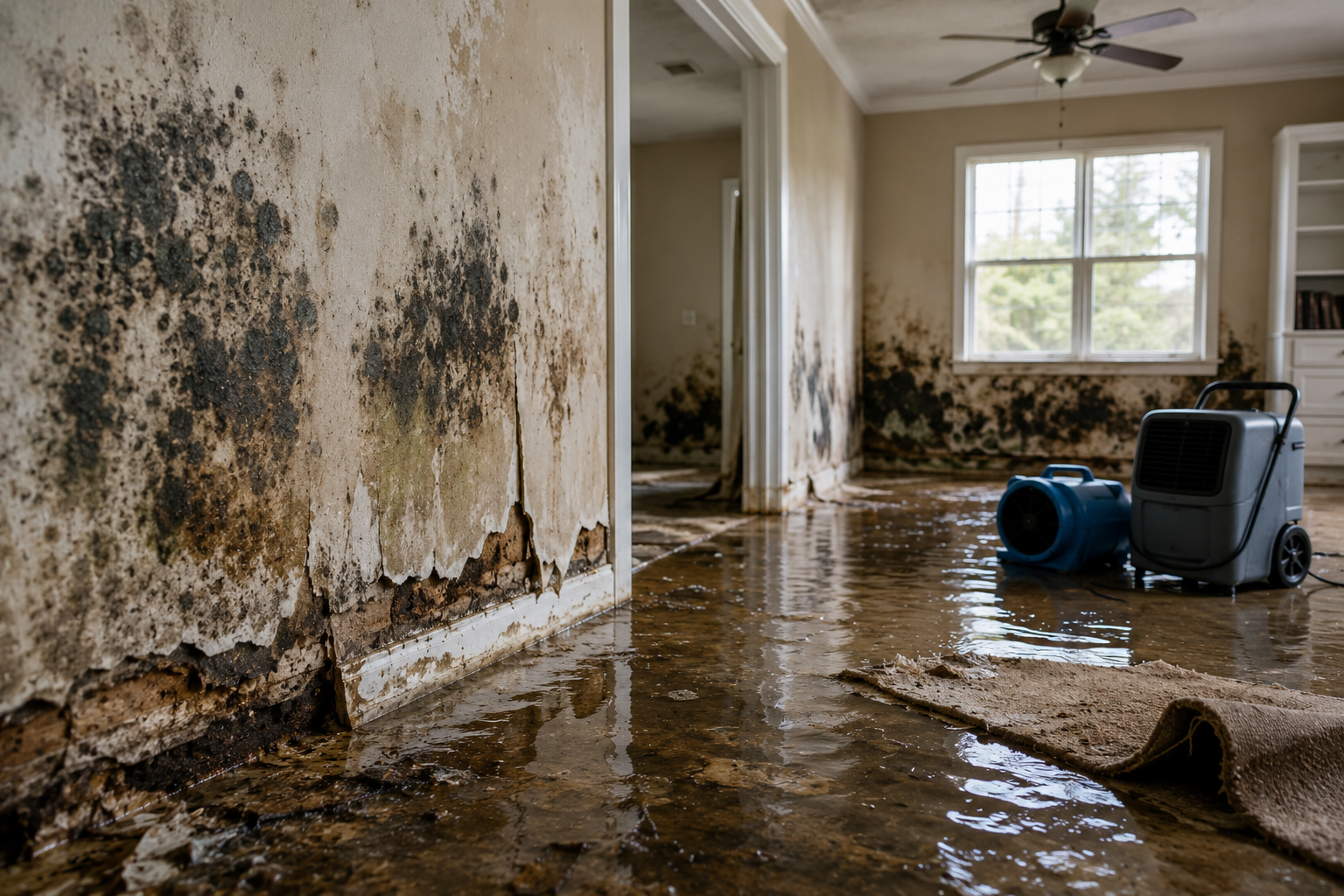
- Inspect drywall for swelling, softness, or bubbling paint
- Look for warping or buckling in hardwood flooring
- Check baseboards for detachment or discoloration
- Observe ceilings below plumbing for stains or sagging
Surface dryness does not confirm complete dryness. Interior moisture may continue affecting materials long after visible water is removed.
Understand When Emergency Water Damage Cleanup Requires Experts
Large volumes of water, long exposure times, and structural involvement usually exceed homeowner capacity. At this stage, many residents begin searching for emergency water damage cleanup solutions.
Professional mitigation may be required when:
- Water has remained for more than 24–48 hours
- Subflooring, insulation, or wall cavities are saturated
- Electrical systems were exposed
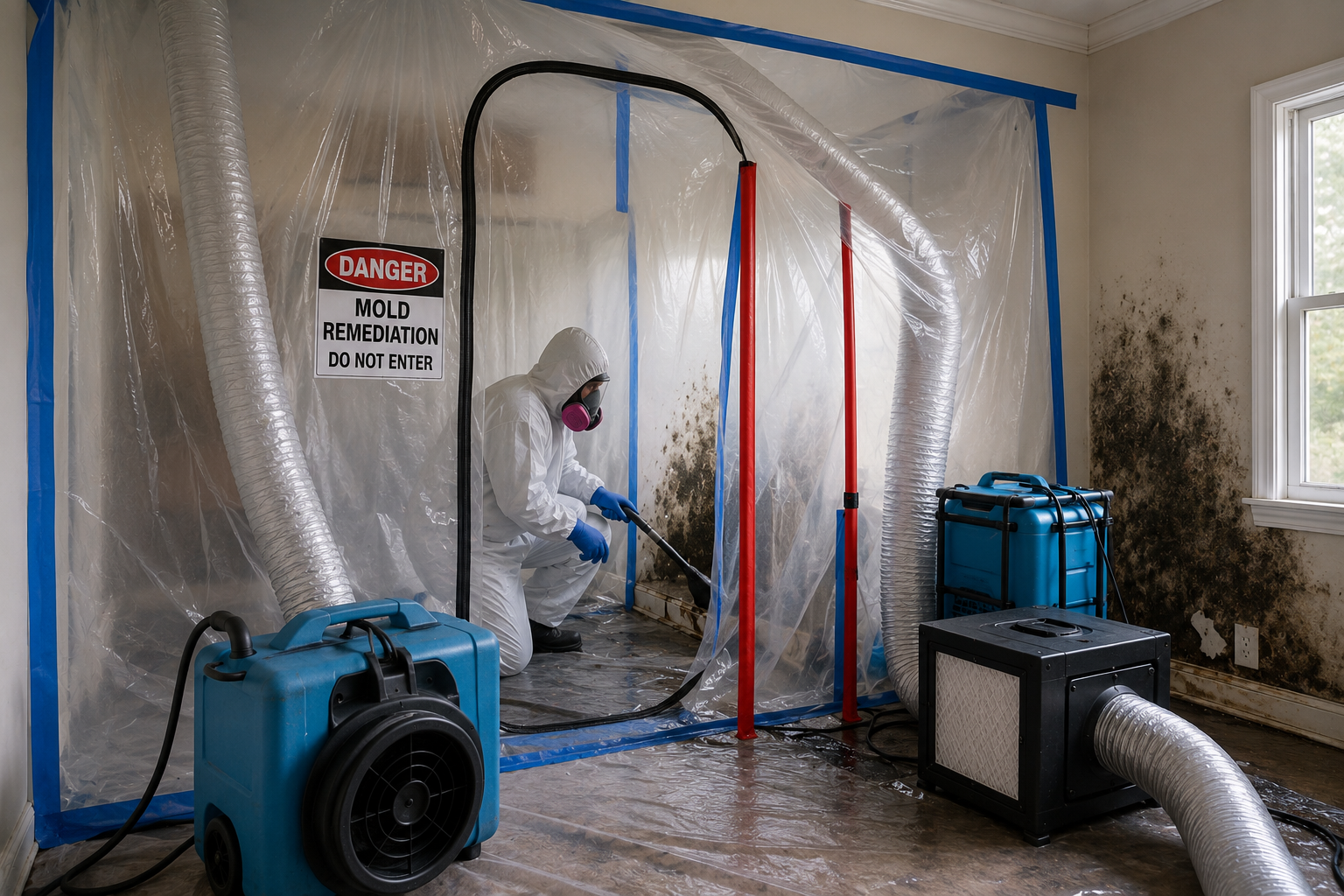
- Mold odors are noticeable
- The intrusion involves blackwater contamination
Professionals also use moisture meters, dehumidification systems, and controlled demolition approaches to stabilize materials without unnecessary removal.
Evaluate Building Materials for Possible Removal
Some components handle moisture better than others. Porous materials usually deteriorate faster and support microbial activity.
- Drywall absorbs water rapidly and may require localized removal
- Insulation loses performance when saturated
- Carpet padding often requires replacement
- Laminate floors tend to swell and may delaminate
- Solid hardwood can sometimes be dried if the distortion is minimal
Evaluation prevents premature disposal and helps target materials with the greatest risk of structural deterioration.
Recognize When Water Damage Restoration Is Necessary
Drying alone does not always resolve water intrusion effects. Water damage restoration typically involves structural assessment, material removal, cleaning, and controlled drying.
Restoration is appropriate when:
- Hidden moisture cannot be located without instruments
- Multiple rooms or floor levels are involved
- Building materials require selective demolition
- Post-drying sanitization is needed
At this stage, a service provider such as Jb Water Damage Restoration could evaluate project scope and establish a mitigation plan without immediate commitments.
Coordinate With Insurance Adjusters
A methodical process limits disputes and improves claim efficiency. Adjusters often require documentation and evidence of preventative action.
- Share photos, videos, and itemized lists
- Keep damaged materials available for review
- Record dates of mitigation steps
- Provide estimates only when requested
Professional reviews often help determine coverage limits but do not replace policy verification.
Frequently Asked Questions
What should I do first after water enters my home?
Confirm electrical and structural safety, then stop the water source before removing standing water.
How fast does damage begin after flooding?
Absorption begins immediately, and structural risk increases within 24–48 hours of exposure.
Can I dry my home without professional equipment?
Basic ventilation helps, but hidden moisture usually requires instruments to verify full drying.
When does water require the disposal of materials?
Items exposed to blackwater contamination often require removal because of pathogen risk.
How do I prevent mold after a flood?
Lower humidity, increase airflow, remove saturated materials, and monitor for moisture behind walls.
Final Thought
A structured response limits damage and lowers long-term costs. Addressing safety, moisture removal, and material assessment helps determine whether professional mitigation is required. Understanding these steps supports informed decisions and effective recovery.
You might also like