Commercial Water Damage Restoration: What Businesses Need to Know
Commercial water damage can disrupt operations, harm property, and create safety hazards. This article explains what commercial water damage restoration involves, how businesses can respond, and what conditions influence recovery timelines and outcomes.
Understanding Commercial Water Damage Restoration
Commercial water damage restoration is the process of stabilizing, drying, and repairing a business property after water exposure. The priority is preventing secondary damage, maintaining safety, and returning the property to a functional state.
Key points include:
- Water can enter from plumbing failures, roof leaks, appliance failures, weather, or sewer backups
- Excess moisture can weaken structures, damage interiors, and promote mold growth
- Timelines depend on water category, contamination, materials affected, square footage, and structural conditions
- Business interruption increases the financial impact, making prompt stabilization necessary
Commercial restoration differs from residential work because properties often contain larger square footage, multilayer mechanical systems, specialized flooring, inventory, and compliance requirements. A structured response reduces preventable losses.
Common Causes of Water Damage in Commercial Properties
Water damage typically results from mechanical breakdowns, building envelope failures, or external water intrusion. Identifying the source early reduces spread and contamination.
Primary causes include:
- Failed water supply lines and plumbing components
- Backed-up drains, blocked wastewater lines, or sewage releases
- Roof membrane deterioration and storm-related penetration
- HVAC condensate issues or cooling tower failures
- Fire-suppression system discharge
- Flooding from nearby bodies of water or surface runoff
- Appliance failures such as water heaters, boilers, or chillers
Each source category influences water quality, remediation requirements, and the need for documentation and compliance.
Initial Steps Businesses Should Take When Water Damage Occurs
A structured sequence prevents escalation and supports safe remediation. The first actions focus on controlling hazards and preserving documentation.
Typical procedures include:
- Restrict access to wet areas to limit slip and electrical hazards
- Shut off the water supply when possible and stop the mechanical sources
- Disconnect impacted electrical systems if they are contaminated
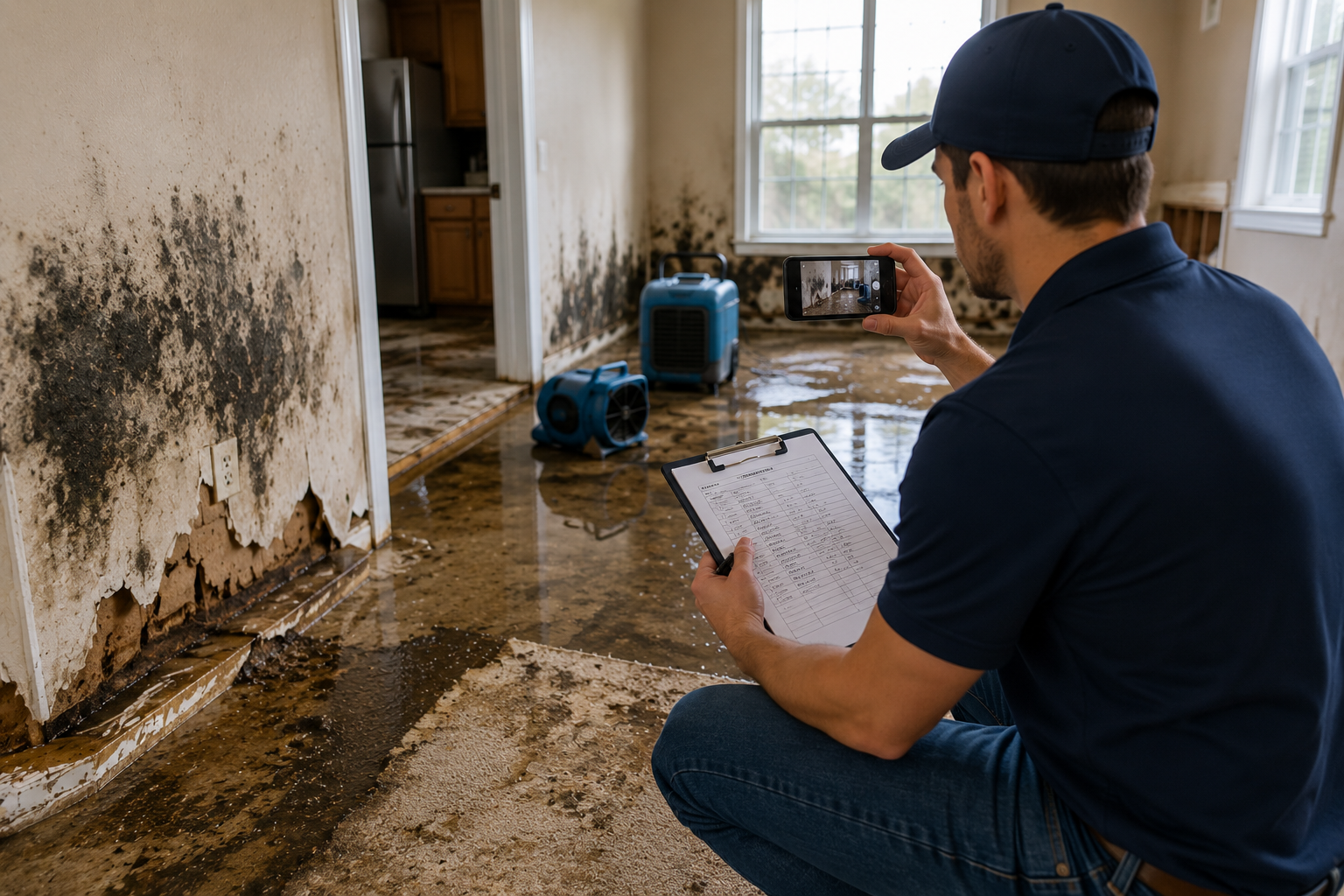
- Document visible moisture, pooling, and item damage with images
- Move inventory, electronics, and sensitive materials away from exposure
- Contact facility maintenance teams and relevant insurers
- Begin ventilation to limit humidity buildup
These steps stabilize the site until qualified remediation personnel arrive. They also support accurate loss reporting and claims review.
Why Rapid Moisture Control Matters in Commercial Settings
Moisture left inside a structure continues to migrate and deteriorate materials. Rapid stabilization limits chemical breakdown, microbial activity, and corrosion.
Moisture control affects:
- Drywall, acoustic ceilings, and insulation, which lose structural integrity
- Flooring systems, including carpet, adhesives, and wood finishes
- Vapor barriers and subfloors that trap moisture if not dried properly
- Steel components that corrode under sustained humidity
- Indoor air quality outcomes in enclosed commercial spaces
A controlled drying process removes water in liquid and vapor form. It also supports accurate moisture readings before rebuilding.
Key Components of a Commercial Water Damage Assessment
Assessments determine the category of water, affected materials, and the required level of containment or disposal. A systematic review guides project planning.
Assessment typically includes:
- Identifying the source and classification of water
- Determining exposure duration and saturation depth
- Using moisture meters or infrared scanning to trace migration
- Inspecting wall cavities, ceilings, and floor assemblies
- Evaluating HVAC and mechanical systems for contamination
- Estimating material salvage vs. removal
- Reviewing access requirements for large-scale equipment
The findings support documentation for business records, insurance review, and trade-specific repairs.
Drying and Dehumidification in Commercial Structures
Drying is the core function of restoration. Commercial spaces require scalable equipment to manage large volumes of air and moisture.
Typical drying processes include:
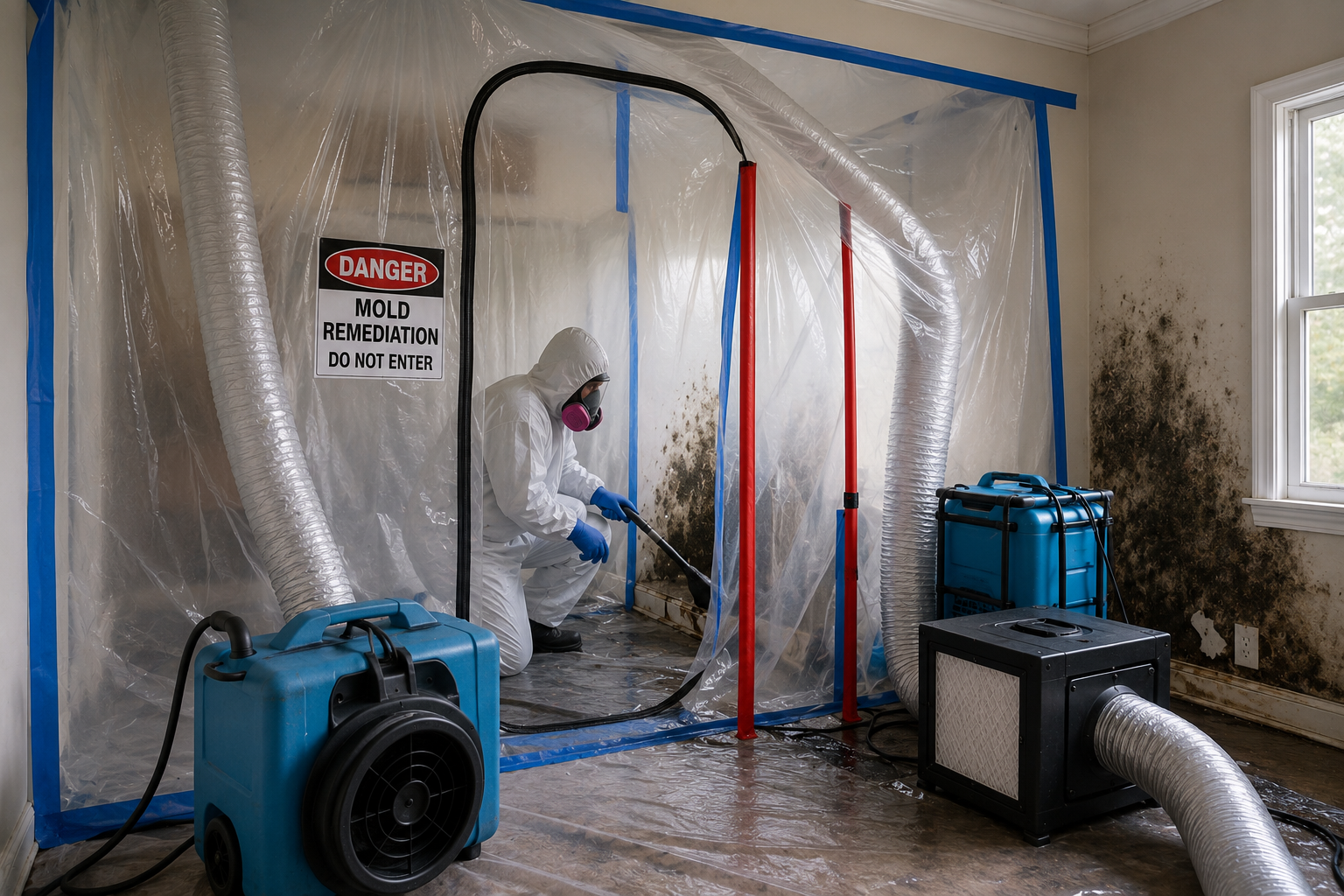
- Negative-pressure containment when contamination is present
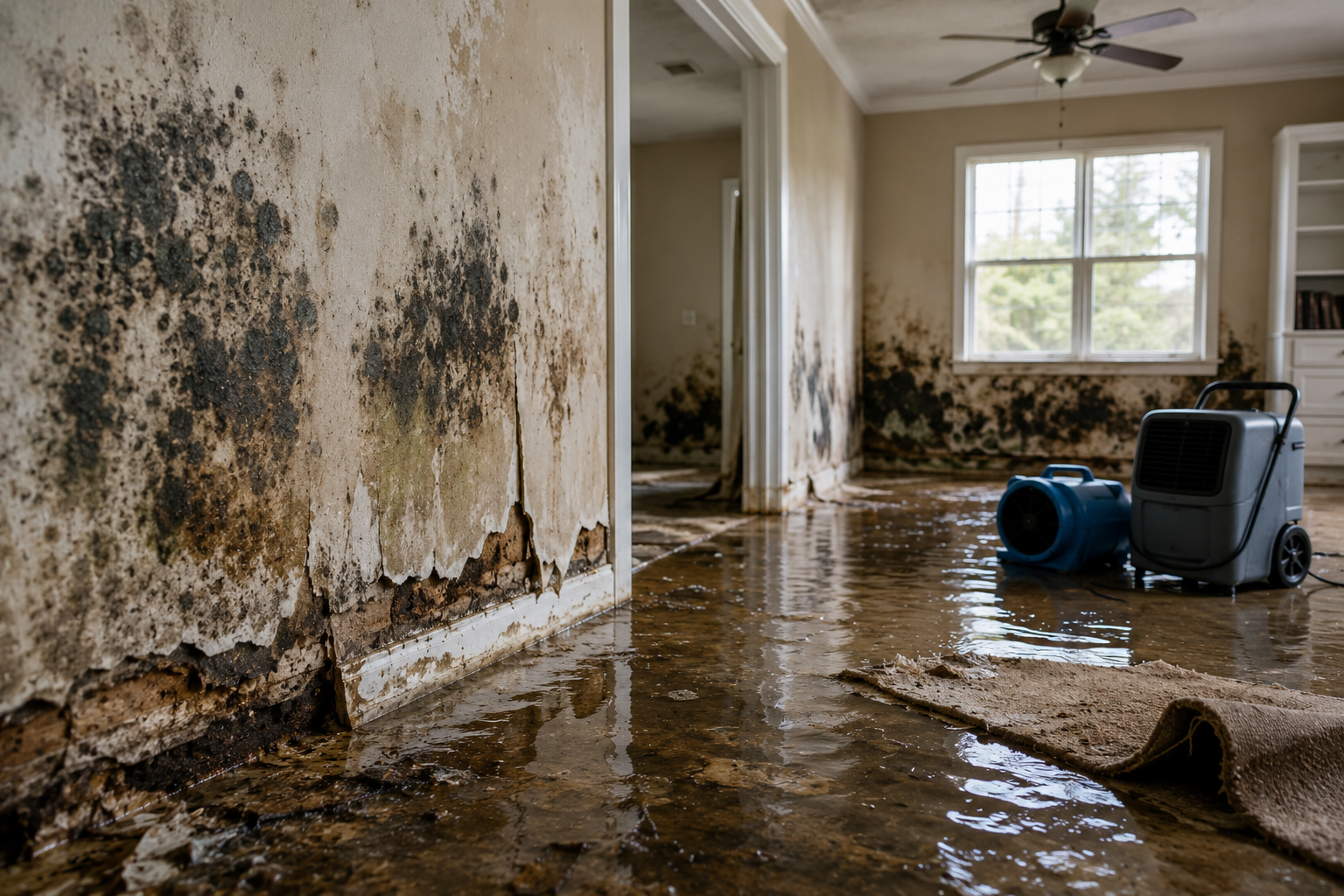
- Strategic placement of air movers to accelerate evaporation
- Desiccant or refrigerant dehumidifiers, depending on the humidity load
- Continuous moisture reading and system adjustment
- Removal of non-dryable materials when structurally compromised
Drying continues until readings confirm equilibrium moisture content for the specific material category.
Structural and Material Considerations in Commercial Buildings
Commercial buildings feature diverse construction materials that respond differently to water exposure. Restoration plans differentiate permeable, semi-permeable, and impermeable substrates.
Examples of material considerations include:
- Concrete may trap moisture and require extended drying
- Gypsum products lose structural value when swollen
- Laminate and engineered products often delaminate
- Commercial carpet tiles can sometimes be salvaged
- Vinyl-backed flooring can trap moisture against subfloors
- Insulation may require replacement depending on the category of water
Understanding these responses ensures that remaining structural materials perform safely after repairs.
Mold and Indoor Air Management After Water Events
Moisture supports fungal amplification under suitable temperature and nutrient conditions. Timelines are influenced by water category, exposure duration, and ventilation levels.
Indoor air management includes:
- Isolating affected areas using barriers and pressure control
- Using air filtration devices rated for fine particulate capture
- Removing porous materials when contamination cannot be corrected
- Cleaning exposed surfaces with appropriate solutions
- Continuous monitoring for humidity stabilization
Air management protects occupants, prevents cross-contamination, and prepares the structure for re-occupancy.
Documentation, Insurance, and Recordkeeping Requirements
Commercial properties typically require formal documentation of conditions and actions. This supports claims activity, lease responsibilities, and regulatory compliance when applicable.
Standard documentation includes:
- Cause of water intrusion and shutdown steps
- Moisture readings at various stages of drying
- Removal versus salvage decisions for materials
- Costs associated with labor, equipment, and disposal
- Business interruption details if relevant
- Photographic evidence of affected areas
Accurate records reduce disputes and clarify responsibilities among property owners, tenants, and insurers.
Factors That Influence Restoration Timelines
Restoration duration varies because each project involves different building assemblies, water categories, and operational constraints. Timelines are not uniform across facilities.
Common variables include:
- Square footage and saturation level
- Water category classification
- Age and type of building materials
- Required removals and reconstruction
- Indoor climate and ventilation systems
- Availability of access for equipment and personnel
Complex facilities—such as medical buildings, data centers, and food-service environments—often require expanded environmental controls.
Returning Operations to a Functional State
Re-occupancy decisions depend on environmental safety, structural readiness, and compliance with any internal or regulatory standards.
Operational recovery may require:
- Clearance of moisture-affected building cavities
- Confirmation that humidity and temperature are stabilized
- Verification of mechanical, IT, and electrical readiness
- Replacement of removed finishes or structural materials
- A plan for resuming personnel occupancy
A phased re-entry strategy reduces disruption and allows continued evaluation of building performance.
Preventive Planning for Future Water Events
Prevention reduces the frequency and severity of water incidents. Planning focuses on infrastructure maintenance, monitoring, and emergency readiness.
Preventive measures include:
- Routine inspection of plumbing, roofing, and HVAC components
- Monitoring devices for leaks, humidity, and mechanical failures
- Documented emergency response procedures for personnel
- Scheduled roof membrane and drainage assessments
- Review of insurance coverage and business continuity
These measures limit downtime and support predictable remediation outcomes.
When Businesses Should Consult a Commercial Service Provider
Some water events exceed internal maintenance capacity due to contamination, scale, or structural exposure. External specialists can manage containment, documentation, and controlled drying.
Indicators that outside assistance may be appropriate include:
- Water originates from sewage or other hazardous sources
- Large structural areas require controlled demolition
- Mechanical systems or inventory are affected
- Mold is suspected, or the humidity cannot be stabilized
- Occupancy safety is uncertain
If a local provider such as Jb Water Damage Restoration is contacted, businesses should request a defined scope of work and documentation standards.
Frequently Asked Questions
What is the priority when a business experiences water damage?
Ensure safety by controlling electrical exposure, restricting foot traffic, and stopping the water source if possible.
How soon can mold begin to develop after a water incident?
Under favorable indoor conditions, mold may begin forming within one to two days of uncontrolled moisture exposure.
Can commercial carpet be dried and reused?
Carpet tiles may be salvageable if the water is clean and drying occurs quickly, but sewage contamination generally requires disposal.
Final Thought
Commercial water damage requires systematic assessment, drying, documentation, and repair. Structured procedures support safe re-occupancy, limit secondary deterioration, and help maintain business continuity across future events.
You might also like