
How Long Does Water Damage Restoration Take for Homes and Businesses?
Water damage restoration timelines vary based on severity, building size, materials affected, and how quickly extraction and drying begin. This guide explains typical timeframes, major variables, and what property owners should expect during cleanup, drying, repairs, and monitoring.
How Long Does Water Damage Cleanup Take?
Initial cleanup generally takes one to three days when extraction starts promptly. Cleanup focuses on removing standing water, stabilizing humidity, and preventing secondary damage.
Key factors influencing this stage include:
- Water volume and spread across floors, walls, and structural cavities
- Ability to access the affected area without obstruction
- Moisture saturation levels in drywall, insulation, and flooring
- Type of water (clean, grey, or contaminated)
Cleanup ends once visible water is removed, and drying equipment is positioned. For large commercial interiors, extraction may extend beyond three days, especially when mechanical rooms, basements, or inventory storage are involved.
How Long Do Drying and Dehumidification Take?
Drying usually takes three to seven days, depending on materials and structure. The goal is to reduce moisture levels to pre-incident conditions.
Dependencies include:
- Construction type (wood houses dry faster than concrete structures)
- Hidden moisture pockets behind walls or insulation
- HVAC and ventilation performance in enclosed settings
- Humidity and temperature control using air movers and dehumidifiers
The drying phase continues until moisture readings stabilize. Commercial buildings with multi-zone HVAC or slab-on-grade construction may require extended monitoring.
Does the Category of Water Change Restoration Time?
Yes. Contamination levels affect both scope and duration. Clean water incidents resolve faster because materials can usually be restored. Grey and black water introduce health and structural considerations.
Typical outcomes include:
- Clean water: Many structural items remain salvageable
- Grey water: porous materials often require removal
- Black water: extensive demolition and sanitation
Businesses with food storage, healthcare operations, or public access may face regulatory requirements before reopening.
How Long Does Material Removal Take?
Material removal may take one to five days if structural tear-out is required. Removal is necessary when moisture cannot be reduced without demolishing wet sections.
Common targets include:
- Drywall and baseboards to access wall cavities
- Insulation and carpet padding due to saturation
- Ceiling tiles in commercial drop ceilings
- Warped hardwood or laminate flooring
This phase adds measurable time but prevents microbial growth and future structural failure.
How Long Does Mold Prevention and Monitoring Take?
Preventive measures are ongoing throughout the restoration process. Surface treatment and moisture control take place immediately after drying begins, and monitoring continues until humidity stabilizes.
Key steps include:
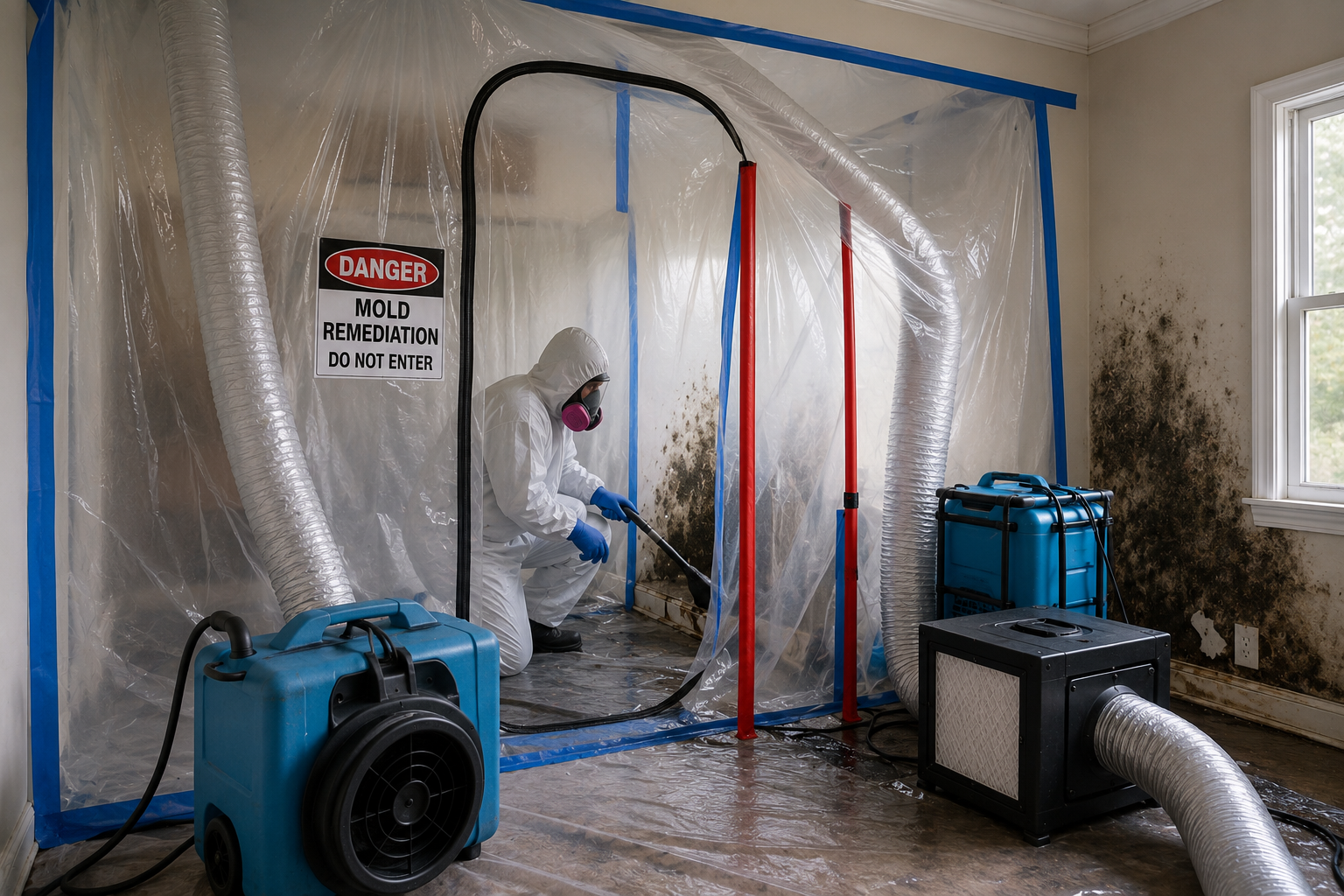
- Surface antimicrobial applications on exposed materials
- Dehumidifier adjustments to keep humidity within a safe range
- Moisture meter readings until equilibrium is confirmed
Mold-prone environments, such as basements or commercial storage rooms, may need extended evaluation.
How Long Does Repair and Reconstruction Take?
Repairs generally require several days to multiple weeks, depending on project scale. Minor fixes proceed quickly, while structural rebuilding extends schedules.
Variables include:
- Drywall replacement and repainting
- Flooring removal and installation
- Cabinet or trim replacement
- Electrical and mechanical inspections
Commercial facilities with operational demands may phase repairs to reduce downtime.
How Long Do Large Commercial Water Damage Projects Take?
Commercial restoration varies widely but often spans multiple weeks when mechanical systems, warehouse inventory, or public-facing interiors require clearance.
Timeline drivers include:
- Square footage and number of affected floors
- Permitting or inspection needs for regulated industries
- Equipment availability and on-site power
- Coordination with facility management
A phased approach may restore functionality to unaffected areas while work continues elsewhere.
When Do Homes and Businesses Return to Normal Operations?
Re-occupancy depends on structural drying, sanitation, and safety confirmation. Homes may resume full use within several days for minor events. Larger residential or commercial incidents require staged reopening.
Primary requirements include:
- Verified moisture reduction in building materials
- Removal of contaminated surfaces
- Air quality normalization
- Absence of safety hazards
Some commercial environments require documentation before workforces or customers return.
How Does Quick Response Influence the Timeline?
Rapid intervention shortens the entire restoration lifecycle. When extraction begins within hours, drying accelerates, salvageable materials increase, and repairs remain limited.
Improved outcomes often include:
- Reduced microbial risk
- Lower structural saturation
- Fewer demolition requirements
- Shorter business interruption
Early stabilization directly limits long-term impact.
What Is the Typical Overall Timeline?
Most residential water damage restoration takes five days to two weeks from extraction through basic repairs. Commercial durations may extend beyond one month depending on the scope.
General ranges include:
- Minor interior leaks: five to seven days
- Moderate multi-room damage: seven to fourteen days
- Severe flooding with demolition: several weeks
Timelines shift based on structure type, business continuity needs, and monitoring requirements.
What Can Delay Restoration?
Delays occur when moisture remains trapped or when structural elements cannot be accessed.
Common contributors include:
- Furniture, cabinets, or inventory blocking airflow
- Concrete slabs retaining moisture
- Cold or unconditioned spaces reduce evaporation
- Electrical safety concerns are preventing equipment operation
Clear work access and stable indoor conditions support faster completion.
Does Insurance Influence Timeframes?
Insurance processing does not change drying physics, but it can affect scheduling for evaluation and approval. Adjuster communication may be required before demolition or reconstruction.
Typical administrative tasks include:
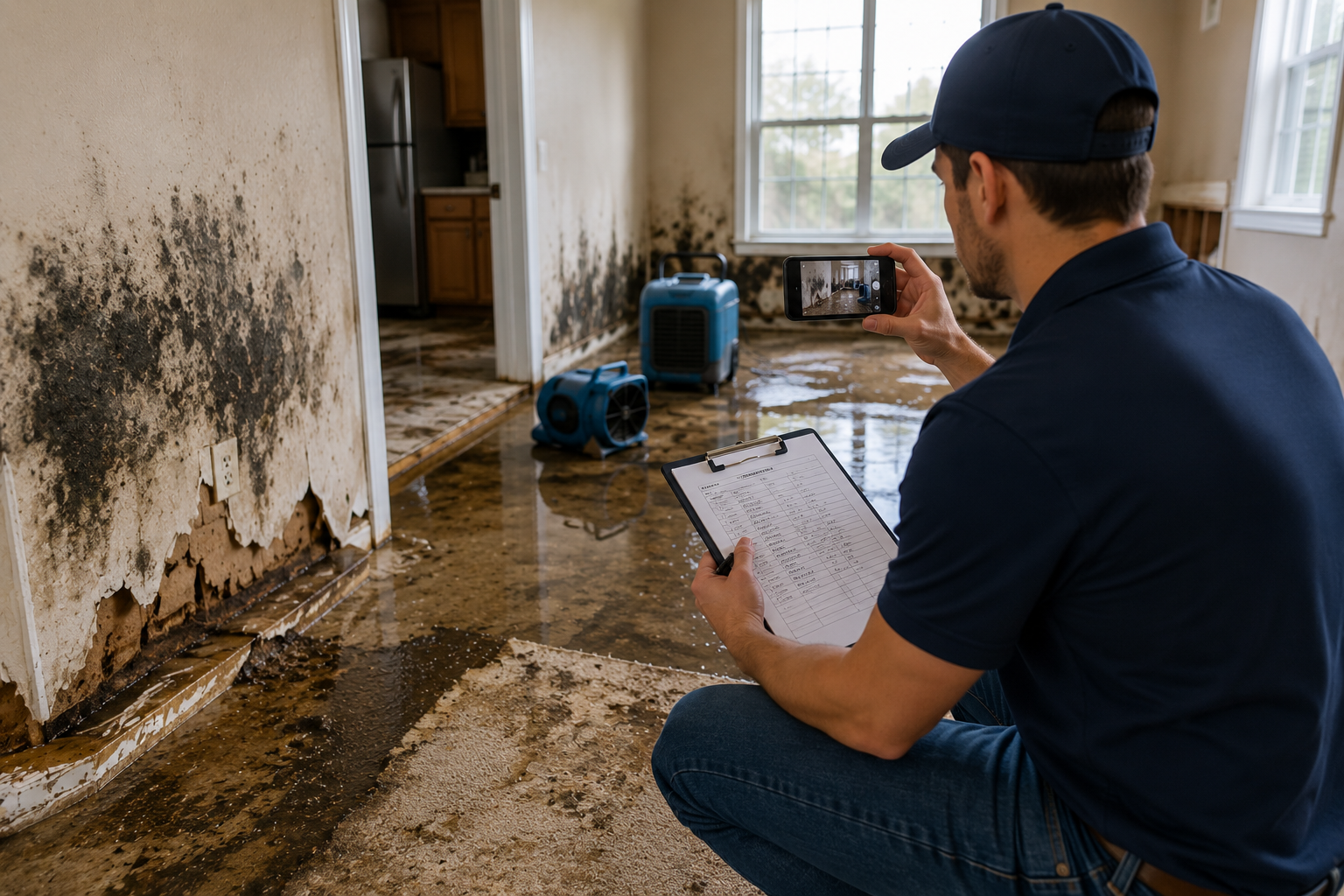
- Documenting damages
- Photographic evidence collection
- Scope confirmation before building repairs
Efficient documentation reduces administrative delay.
Frequently Asked Questions
How long does it take to dry a house after water damage?
Typically, three to seven days when the equipment runs continuously.
How soon does mold form after water exposure?
Microbial activity can begin within 24–48 hours under favorable humidity.
How long does commercial water extraction take?
One day or more, depending on square footage and equipment access.
Can drywall be saved after water damage?
Yes, if moisture levels decline quickly and no contamination is present.
Do hardwood floors take longer to dry than carpet?
Yes. Dense materials retain moisture longer and often require targeted drying.
Final Thought
Water-related timelines vary based on how quickly conditions are stabilized and how extensively moisture migrates through building materials. Homes generally resolve faster than commercial environments, but both depend on early action and controlled drying. When timelines remain realistic and monitored, long-term structural risk declines.
You might also like