
2026 Tips for Effective Water Damage Cleanup in California
Homeowners in California, including those in Escondido, CA, need quick, effective action during an emergency water damage cleanup to limit harm. This guide presents essential steps: securing safety, stopping leaks, extracting and drying water, and sanitizing affected areas. It covers mold prevention and deciding when professional restoration is required under California conditions.
Immediate Safety and Initial Assessment
Ensuring personal safety and evaluating the extent of damage are the priorities after water intrusion.
- Power hazards: Turn off electricity (and gas if needed) at the main breaker to prevent electrocution or fire. Water conducts electricity, making even shallow standing water dangerous.
- Personal protective equipment (PPE): Wear rubber gloves, boots, and eye protection when cleaning up, especially if water is dirty or contaminated. Floodwater can contain harmful bacteria or chemicals.
- Structural risks: Stay out of rooms with sagging ceilings, buckling floors, or cracked walls. These signs indicate serious structural weakening from water.
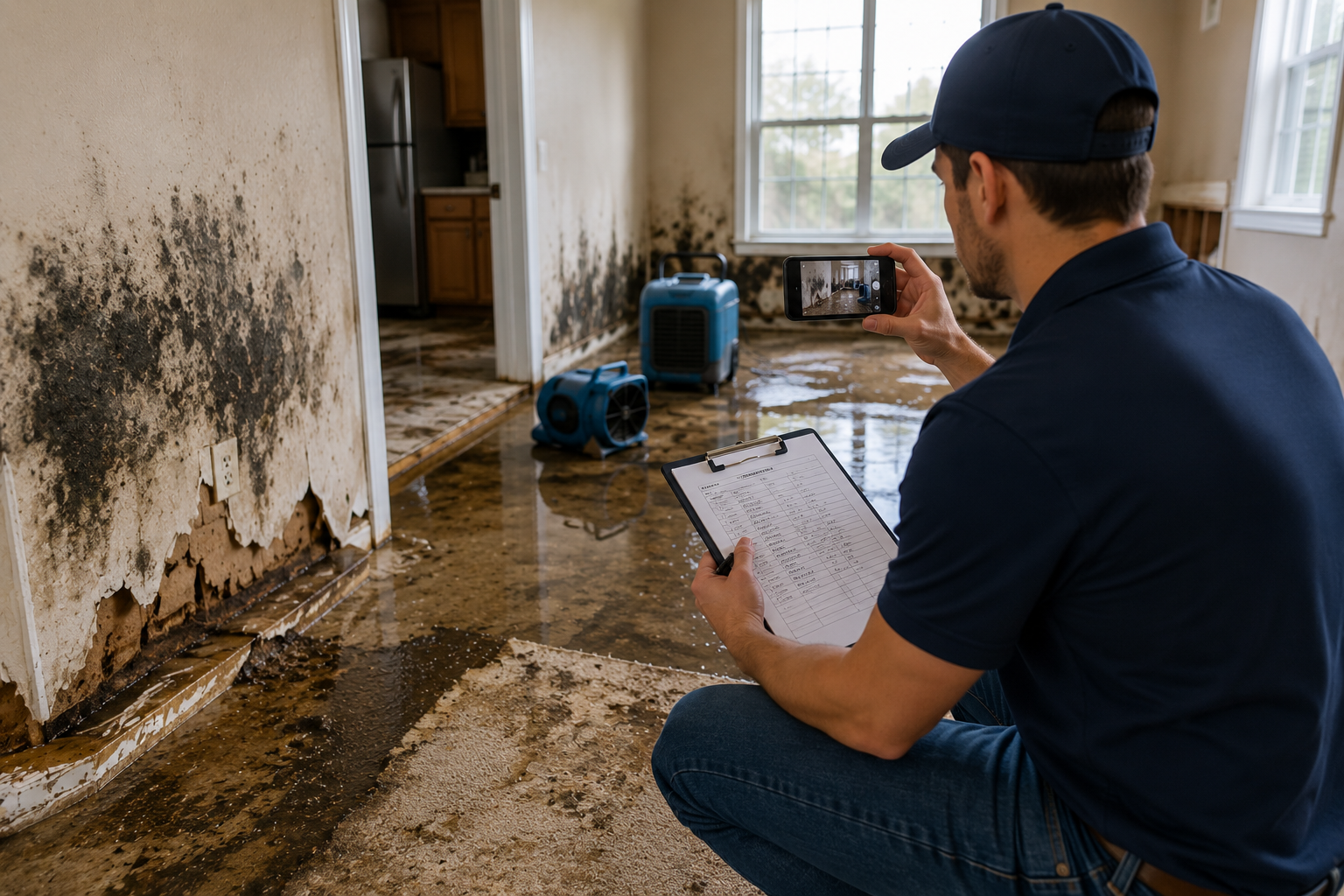
- Quick documentation: If safe, take photos of visible damage before moving anything. This documentation helps with later insurance claims and damage assessment.
- Safety mistakes to avoid: Never enter standing water while power is on, and do not ignore strong odors (gas or sewage). Ignoring safety cues can cause electrocution or injury.
- Immediate action: Time is critical. Conduct a rapid visual assessment while maintaining safety. Any delay can lead to increased structural damage or health risks.
Stopping the Water Source
Once safety is ensured, stop the water flow at its source to prevent ongoing flooding.
- Locate shutoff valves: Identify and close the main water supply valve (often in a basement or utility area) to halt a burst pipe. For appliance leaks, shut off local valves (dishwasher, washing machine, etc.) first.
- Temporary fixes: If the leak is from a roof or exterior wall, use a tarp or sealant to slow water entry. Collect dripping water in buckets or basins until repairs can be made.
- Tools to have ready: Keep a water valve key or adjustable wrench near your main shutoff. Label the valve location so you can act immediately in an emergency.
- Consequences of delay: Continuing water flow will expand the damaged area. Even a small leak can pour hundreds of gallons in hours, worsening the cleanup required.
- Common errors: Failing to identify the correct valve or not shutting off any water source lets flooding worsen. Not stopping the source makes all subsequent steps more difficult.
- Prompt mitigation: Stop the leak before cleanup. If you cannot safely close a valve or find the source, focus on removing water and call a plumber or restoration company immediately.
Removing Water and Drying the Area
Remove standing water as fast as possible and dry affected spaces thoroughly to prevent secondary damage.
- Water extraction tools: Use a wet/dry vacuum, pump, or mops to remove standing water. Start in the lowest areas (basements, ground floors) so gravity can help.
- Furniture and contents: Move soaked furniture, rugs, and carpets out or lift them off the floor. If damp materials can be dried (like wooden chairs), elevate them on blocks to allow air circulation.
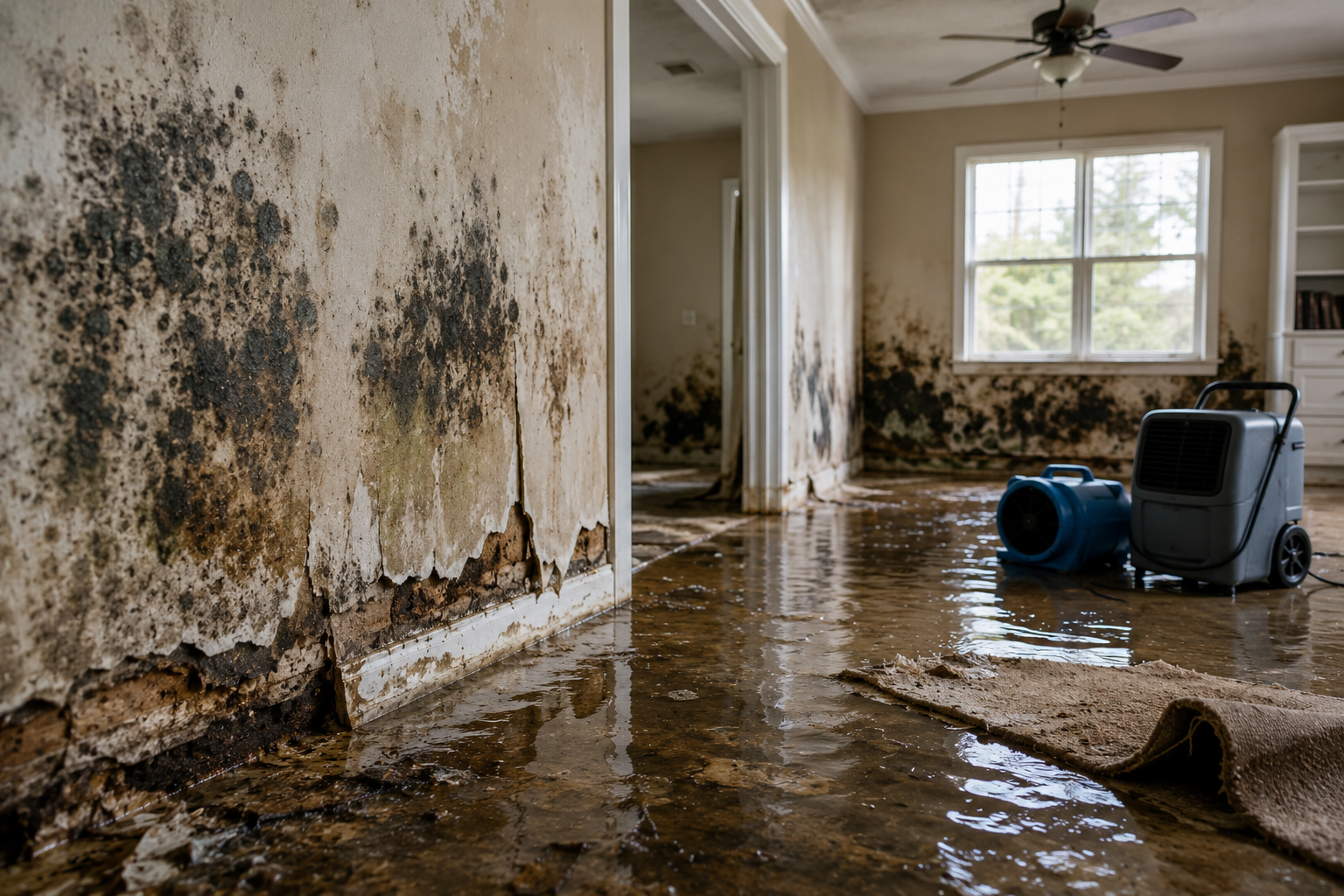
- Ventilation: Open windows and doors (if weather permits) to increase airflow. Place box fans and dehumidifiers to pull moisture out of the air and surfaces.
- Hidden moisture: Cut small holes at the base of wet drywall and along floors to let trapped water escape. Use a moisture meter to check behind walls or under floors that might still be damp.
- Drying focus: Pay special attention to walls, baseboards, and ceilings where water can hide. Drying may require running fans and dehumidifiers continuously for days.
- Equipment comparison: Rented submersible pumps remove large water volumes much faster than buckets. Wet/dry vacuums work for moderate amounts; towels and ordinary household fans are much slower and often insufficient.
- Mistakes: Do not use heat guns or hair dryers on wet surfaces (fire hazard). Avoid relying on regular home fans alone; professional-grade fans and dehumidifiers are far more effective.
- Timing: Begin extraction immediately. Even 24 hours of standing water can cause structural damage. Remember that mold can start growing within 24–48 hours on wet materials.
Cleaning, Sanitizing, and Preventing Mold
After removing water, clean and disinfect surfaces and materials to protect against mold and health hazards.
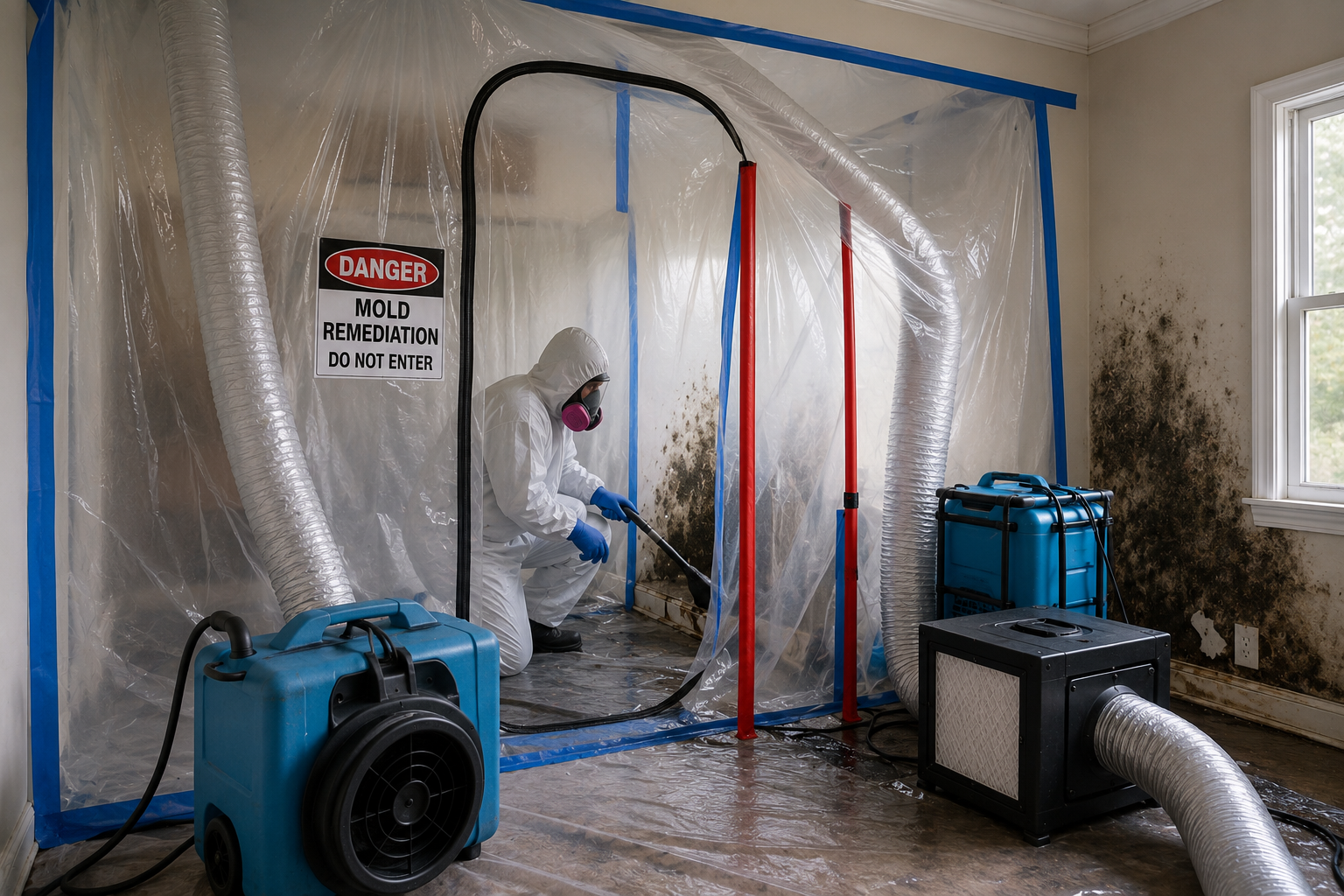
- Remove unsalvageable materials: Discard wet drywall, insulation, ceiling tiles, and carpet padding. Porous materials hold moisture and mold; tearing them out prevents hidden rot.
- Clean hard surfaces: Scrub floors, walls, and countertops with hot water and detergent. Then disinfect with a bleach-water solution (about 1 cup bleach per gallon) to kill bacteria and mold spores.
- Soft contents: Wash salvageable fabrics (curtains, bedding) on a hot cycle. Items soaked in floodwater (like mattresses or upholstered furniture) are often unsalvageable and should be thrown away.
- Prevent mold: Keep indoor humidity below 50%. Continue running fans and dehumidifiers during and after cleaning. Mold can begin in as little as 24 hours on damp surfaces.
- Use antimicrobials: After drying, applying a commercial antimicrobial spray or fogger can further inhibit mold growth on affected surfaces.
- Cleaning constraints: Avoid bleach on wood, metal, or colored fabrics (it can damage these materials). Use alternate cleaners (like vinegar solutions) on delicate surfaces.
- Common mistakes: Skipping disinfection or leaving wet debris behind allows mold to thrive. Do not delay these cleanup steps—mold grows quickly on organic materials.
- Inspection: Keep monitoring the area for musty odors or new stains. Continue drying until all materials are completely dry to the touch before restoring furniture or drywall.
Handling Contaminated Water
The source of water affects cleanup methods: clean water is handled differently than contaminated floodwater.
- Water categories: Clean water (Category 1) comes from supply lines or rain and is low risk. Gray water (Category 2) from appliances or sinks contains some contaminants. Black water (Category 3) from sewage or floodwaters is highly contaminated.
- Category 1: If water is clean (no sewage or chemicals), you can often do the cleanup yourself with a wet-vacuum and drying. Treat surfaces with disinfectant after extraction.
- Category 2: Wear gloves and a mask for gray water. Thoroughly disinfect all affected areas. When in doubt about contamination (e.g., toilet overflow without solids), professional cleanup is recommended.
- Category 3: Sewage or floodwater cleanup always requires professionals. Do not enter large areas of black water. Restoration crews have the training and gear for biohazard removal.
- Protective measures: Always wash hands and equipment after cleanup. Change out of wet clothes immediately. People with immune issues or respiratory conditions should avoid mold or contaminated areas.
- Mistakes: Never vacuum black water with household machines or pour it down drains. Using improper gear or cleaning agents on contaminated water can spread pathogens.
- Real-world risk: Exposure to black water can cause illness. Professionals follow safety protocols, such as removing and disposing of contaminated materials in sealed bags.
When to Seek Professional Help
Large-scale damage, contamination, or structural issues often mean it's time to involve a restoration company.
- Extent of damage: Call professionals if water covers more than one room, has been standing over 24 hours, or has soaked into walls or flooring. Flooding in basements or multi-story leaks usually require expert drying.
- Contaminated water: If there is sewage backup or rising floodwater, stop DIY efforts. Only specialized crews (with Hazmat protocols) should handle these hazardous cleanup situations.
- Structural concerns: Noticeable warping, ceiling sagging, or electrical and HVAC systems affected mean a pro should assess stability and safety. They can prevent collapse or hidden hazards.
- Professional equipment: Restoration teams use industrial-strength pumps, dehumidifiers, and moisture meters that achieve complete drying far faster than household tools.
- Insurance guidance: Some insurance policies require work by certified contractors for full coverage. Professional restoration firms understand claim processes and documentation requirements.
- DIY limitations: Attempting a large cleanup without experience can leave hidden moisture in walls or floors, leading to mold. Experts ensure a thorough drying so that problems do not reappear later.
Insurance, Costs, and Budgeting
Be aware of costs and coverage to prepare financially for water damage cleanup.
- Cost range: Minor water cleanup jobs often cost $1,000–$5,000, while extensive restorations (whole-house flooding) can range from $5,000–$20,000 or more.
- Insurance coverage: Standard homeowner policies usually cover sudden leaks (burst pipes, appliance malfunctions) but exclude flooding. Coverage for sewer backups or sump pump failures typically requires special add-ons.
- Documentation: Take photos of all damage before moving anything. Keep receipts for any cleanup supplies or rentals. These records help substantiate insurance claims.
- Out-of-pocket mitigation: If repairs are not covered, focus spending on rapid mitigation (pumps, fans, dehumidifiers). Quick action can reduce overall damage and save on restoration costs.
- Common pitfalls: Delaying the insurance claim or attempting major repairs without notice can lead to denied claims. Also, forgetting to budget for demolition and disposal of ruined materials often causes cost overruns.
- Budget planning: Factor in costs for replacing demolished drywall, flooring, and personal items. Inadequate budgeting for full cleanup often results in unexpected expenses.
Local California Climate and Environmental Factors
California's weather and geography create unique water damage challenges for homeowners.
- Heavy rains: California's wet season and atmospheric rivers can drop many inches of rain in hours. Urban areas can flood during these storms if storm drains back up.
- Wildfire aftermath: Burn scars from recent fires can no longer absorb rain. Heavy rain on charred hillsides often leads to flash floods or mudslides in affected neighborhoods.
- Coastal conditions: Near the coast, salty air and marine humidity accelerate corrosion of roofs and pipes. Persistent coastal dampness can keep buildings moist year-round, boosting mold risk.
- Windstorms: Strong Santa Ana winds may break branches or damage roofs. If rain follows windstorms, roof or gutter damage can translate to water entry in homes.
- Local search terms: Homeowners can search for Emergency Water Damage Cleanup in Vista, CA, to find nearby restoration services. Localized keywords help connect residents with fast, local assistance.
- Preparedness: Knowing these factors allows preparation: clearing gutters before rain, moving valuables off the ground in flood zones, and monitoring weather alerts can all reduce risk.
Conclusion
Quick, thorough cleanup is essential to protect health and property after water damage. Following these practical steps can reduce mold and structural issues while guiding homeowners on when expert help is needed. Local restoration companies such as Jb Water Damage Restoration understand California conditions and are ready to ensure complete recovery.
Frequently Asked Questions
How quickly does mold begin growing after water damage?
Mold can start growing within 24–48 hours on damp materials. Promptly drying and cleaning flooded areas is critical to prevent mold development.
What safety precautions should I take during water damage cleanup?
Shut off electricity and gas before entering flooded areas, and wear protective gear (gloves, boots, mask) if the water is contaminated. Check that floors and ceilings are structurally sound before walking on them.
Can I handle a minor water leak cleanup myself?
Yes, for clean water leaks (Category 1), homeowners can often do basic cleanup. Use a wet/dry vacuum to remove water, dry the area, and disinfect surfaces. For larger leaks or any contamination, professional restoration is recommended.
When should I call a professional water damage restoration service?
Seek professional help if water covers a large area, has been standing over 24 hours, or is contaminated (e.g., sewage). Experts have specialized equipment to fully dry, sanitize, and repair extensive or hazardous damage.
Will homeowner’s insurance cover water damage cleanup?
It depends. Most policies cover sudden leaks or overflows (like burst pipes) but exclude flood damage. Sewer backup and sump pump failures often require extra riders. Always report damage promptly and submit documentation for your claim.
You might also like