
Top Tips from Experts on Effective Water Damage Restoration in California
This article explains how water damage restoration works in California homes, what homeowners should expect at each stage, and how to avoid common mistakes. It focuses on practical restoration decisions, timelines, risks, and limitations, with guidance relevant to Water Damage Restoration in Carlsbad, CA, and similar coastal environments. The goal is to help homeowners understand restoration processes clearly before repairs begin.
Immediate Response and Safety Measures
Stopping the water source and ensuring safety are the priorities after damage.
- Shut off water and power: Close valves or pumps to stop water flow, and turn off electricity to flooded areas to avoid electric shock.
- Evacuate and protect: Keep people and pets away from wet zones and visibly damaged structures. Wet floors and ceilings can collapse or cause short electrical systems.
- Wear protective gear: Use gloves, boots, and masks before touching contaminated water or materials.
- Document damage: Take photos or video of affected areas before cleanup. This records the situation for insurance and guides professionals.
- Call professionals for repairs: If a pipe is bursting or an appliance has leaked, contact a plumber immediately. Stopping the leak alone is not enough – it must be properly repaired to prevent further flooding.
Above, a technician repairs a burst pipe to halt water intrusion. Quick containment of leaks prevents water from spreading. Acting fast and safely protects structural integrity and reduces health hazards.
Assessing Damage: Water Categories and Classes
Water damage is classified by contamination (Category) and severity (Class) to guide restoration.
- Category 1 (Clean Water): Comes from sanitary sources like broken water supply lines or rainwater. Poses little health risk. Small leaks into tile or concrete usually fall here.
- Category 2 (Gray Water): Contains some contaminants (chemicals, microorganisms). Examples include overflow from washing machines or sinks with detergent. May cause illness on exposure. Affected porous materials typically require sanitizing.
- Category 3 (Black Water): Grossly contaminated, such as sewage, floodwater, or backed-up toilets. It carries pathogens and toxins, so it’s hazardous to touch or ingest. Items soaked in Category 3 water usually must be discarded.
- Class 1 (Minor Intrusion): Water affects a small area (<5% of walls/floors) with slow evaporation. Few porous materials wet – easiest to dry.
- Class 2 (Moderate Intrusion): Water affects an entire room or >5% of surfaces. Carpets, furniture, and subfloors are wet; the evaporation rate is fast.
- Class 3 (Severe Intrusion): The entire area is saturated (ceilings, walls, floors) – >40% of surface area. Evaporation is very rapid, and structural materials may warp.
- Class 4 (Deep Damage): Involves materials with low porosity (concrete, stone, plaster) that trap “bound” water. Requires prolonged drying and specialized techniques.
Identifying the correct category and class is essential. For example, using only fans on Class 4 damage or cleaning Category 3 water as if it were clean water can leave hidden moisture or contaminants. Detailed assessment often involves moisture meters and thermal imaging to find hidden wet spots.
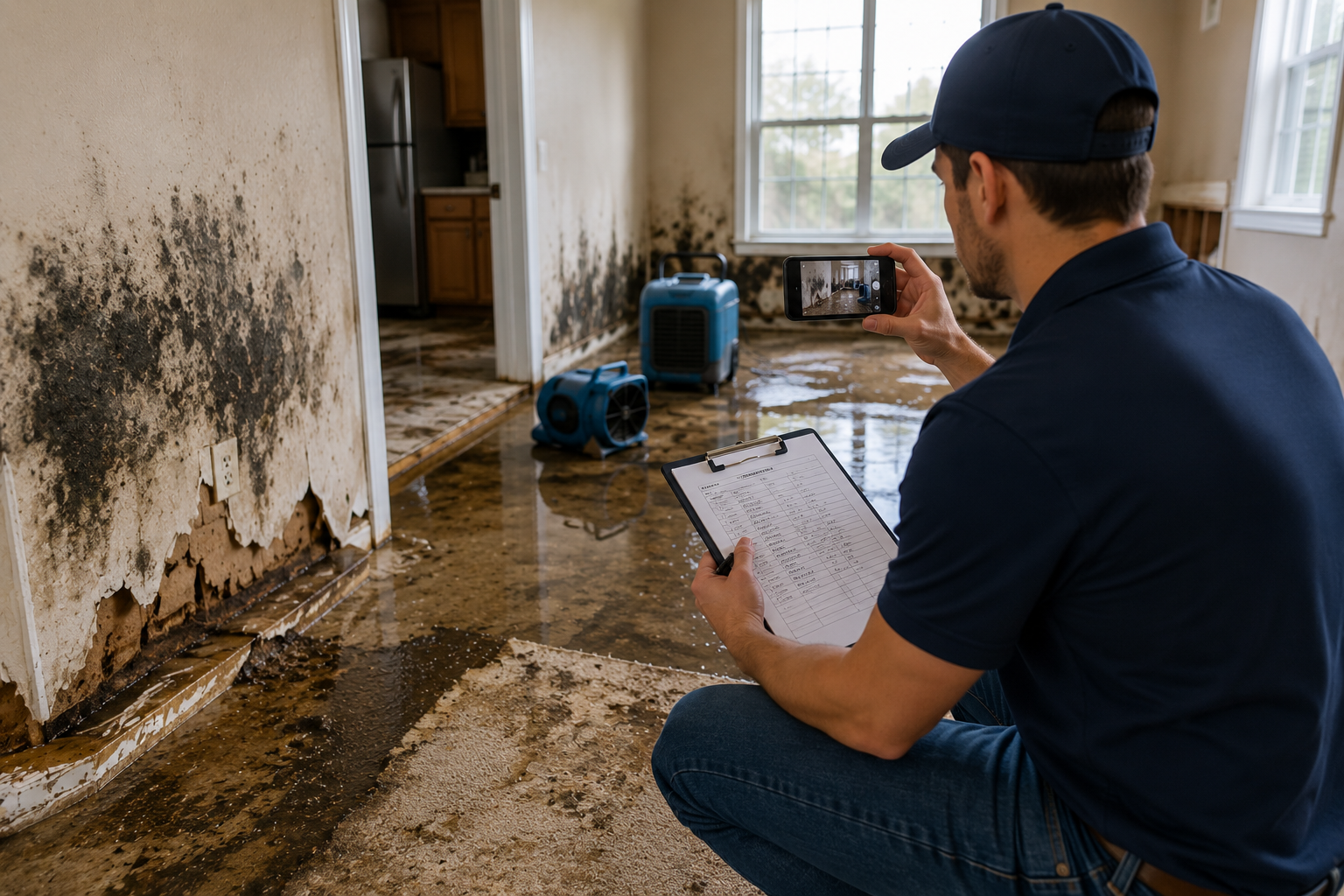
Here, a professional records water damage on a wall during inspection. Accurately classifying the water and damage helps determine the appropriate cleanup and drying methods. Thorough documentation of damage extent also supports insurance claims.
Water Extraction and Drying Techniques
Removing water and thoroughly drying affected areas are essential to prevent secondary damage.
- Water extraction methods: Use pumps or wet vacuums to remove standing water quickly. Standing water is “the enemy” of structures and must be eliminated to protect floors and foundations.
- Air movement: Deploy high-velocity air movers (fans) to circulate air across wet surfaces. This speeds evaporation of moisture trapped in carpets, walls, and floors. Household fans are often insufficient for this scale.
- Dehumidification: Run industrial dehumidifiers to pull moisture out of the air and materials. Reducing ambient humidity prevents mold and restores normal moisture levels.
- Monitor moisture levels: Professionals use moisture meters, hygrometers, and thermal cameras to track drying progress. This ensures hidden damp spots (behind walls or under floors) are found and treated.
- Equipment and technique: In large or complicated jobs (Class 3–4 damage), the use of drying mats, injecti-dry systems, or specialty floor drying equipment may be needed. These tools draw moisture directly out of materials.
- Time factor: Drying can take days to weeks. Typical time to fully dry a single affected room is often 3–7 days. Porous materials (wood, drywall) may need extra time. Attempting to accelerate with heat or insufficient airflow can backfire if not well managed.
- Common pitfalls: Relying only on fans or opening windows can leave concealed moisture. Even a small, undried pocket can grow mold or weaken structures over time. It’s crucial to continue drying until sensors confirm dryness.
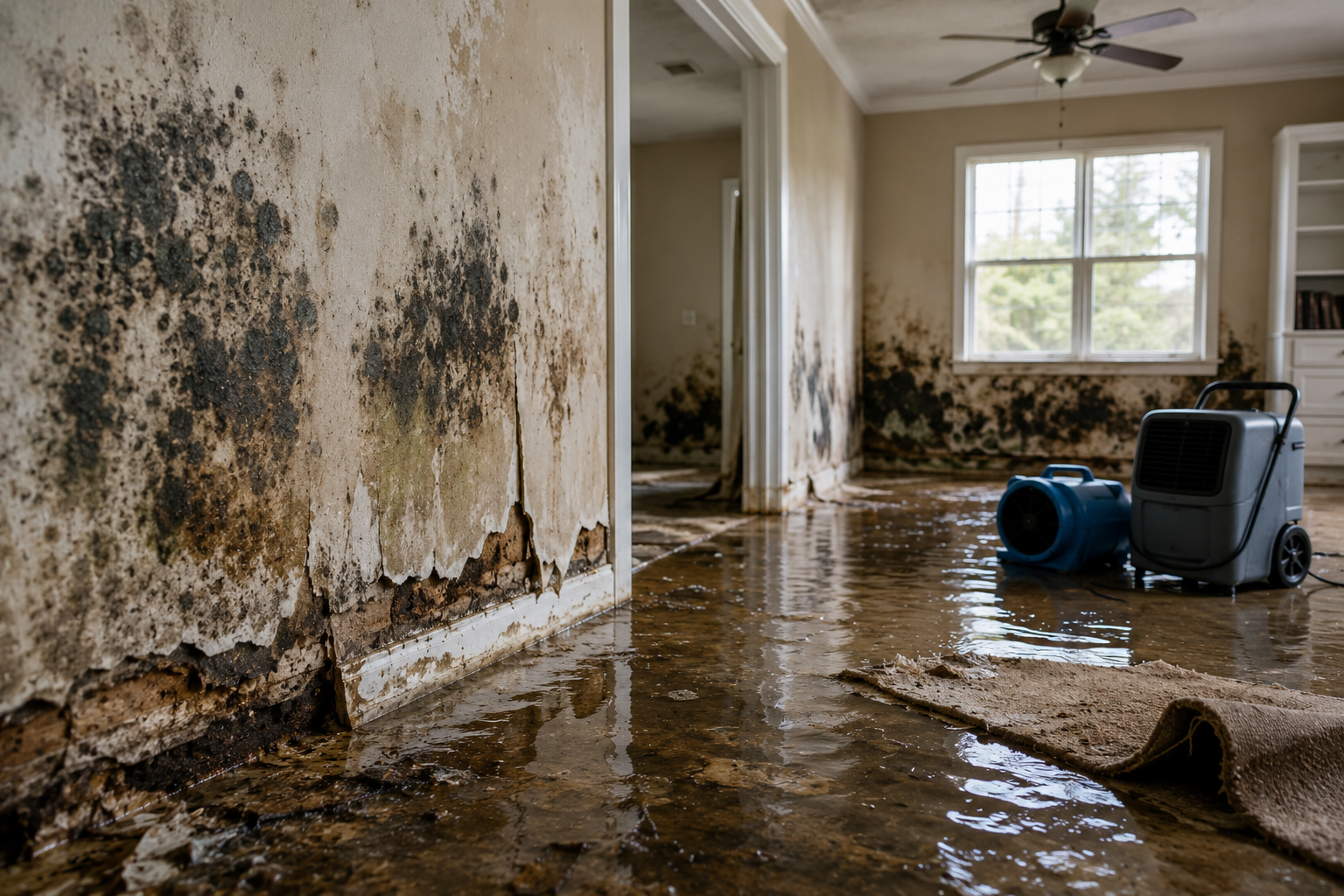
Thorough drying prevents mold and rot. Incomplete drying can lead to warping, rust, or mold growth within days. Therefore, professionals often run fans and dehumidifiers continuously and adjust their strategy as moisture readings drop.
Cleaning, Sanitization, and Mold Prevention
After water removal, cleaning and sanitizing reduces health risks and mold.
- Remove unsalvageable materials: Wet porous items that absorbed contaminated water often cannot be cleaned and should be discarded to stop mold. Drywall saturated by Category 2 or 3 water is usually cut out.
- Cleaning surfaces: Non-porous surfaces should be cleaned with water and detergent to remove dirt. For Category 2–3 water, use EPA-registered antimicrobial or disinfectant cleaners. This kills bacteria and mold spores left by dirty water.
- Dry and ventilate: After cleaning, ensure everything dries completely. Continue running fans/dehumidifiers and open windows if the weather permits. Proper drying is itself a critical mold prevention step.
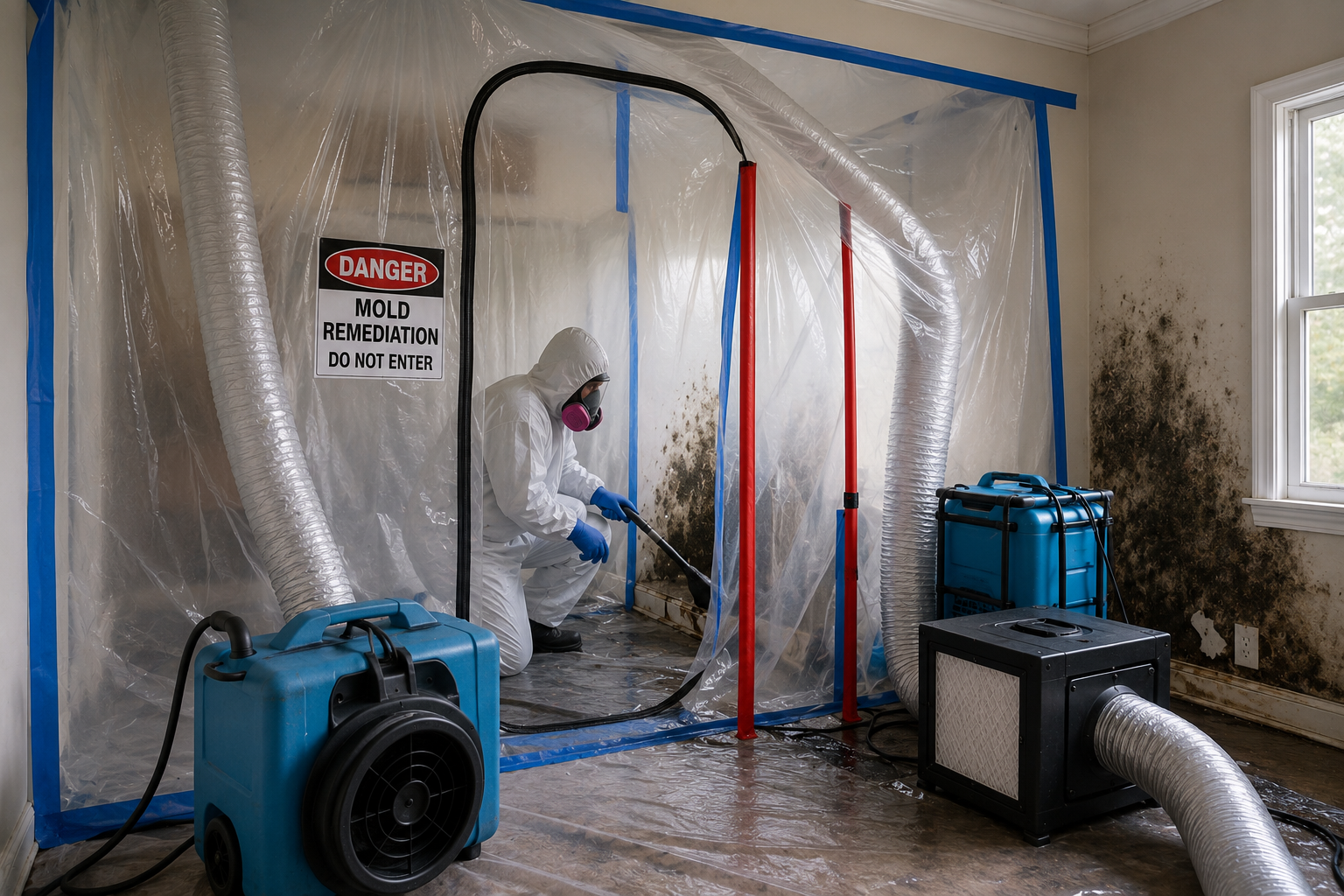
- Mold growth risk: Mold can begin growing within 24–48 hours on damp materials. Therefore, delays in drying or cleaning raise mold risk. Once begun, mold spreads inside walls and furnishings, causing stains and health hazards.
- Air quality control: Run air scrubbers or HEPA filters during cleanup to capture airborne mold spores. Checking for musty odors or visible mold indicates where to focus cleaning.
- Post-clean inspection: After drying, inspect hidden cavities. Any remaining damp spots should be treated or dried again. Often, inspectors will use borescopes or moisture probes to verify dryness.
Proper sanitization and mold prevention safeguard health and limit repair work. In practice, professionals often spray antimicrobial treatments and seal cleaned surfaces. Skipping this can result in lingering odors, illness, and the need for costly mold remediation later.
Professional vs DIY Restoration Approaches
Choosing between DIY cleanup and professional restoration depends on the extent of damage and risk.
- DIY efforts: Homeowners can manage minor leaks or small spills. Basic tasks include mopping up water, setting up fans, and removing wet items. This may be acceptable for Category 1 incidents with minimal damage. However, homeowners often underestimate hidden issues.
- Professional services: Certified technicians bring expertise, equipment, and safety protocols. They use moisture meters and cameras to find all wet areas, and industrial dryers to reach difficult spots. Professionals also handle contaminated water (Category 2/3) safely, using PPE and disposal methods.
- Safety and thoroughness: DIYers may neglect structural checks or not turn off electricity, risking injury. They may also miss water trapped in ceilings or wall cavities, allowing mold to grow unseen. Professionals prioritize safety and cover every step systematically.
- Cost considerations: Doing it yourself can save money upfront. But insufficient restoration often leads to recurring moisture, mold, and additional repairs – ultimately costing more. Professionals incur a higher initial cost but aim for a complete fix.
- Insurance and documentation: Insurers often expect professional documentation for claims. Restoration firms provide detailed moisture reports and an inventory of damaged items, which can simplify claims.
- When to hire a pro: Major floods, sewage backups, or when water covers large areas always warrant a call to experts. Also, if symptoms persist, a professional inspection is wise.
Both options involve tradeoffs. For best results, even DIYers should follow standards. When budgets or safety are constraints, at least getting an expert assessment early can clarify the scope and avoid mistakes.
Documentation and Insurance Considerations
Thorough documentation and understanding of insurance rules help manage costs and logistics.
- Record everything: Photograph or video all damage (structures, contents) before cleaning. Keep copies of repair estimates, invoices, and moisture logs. This evidence supports insurance claims and ensures nothing is overlooked.
- Insurance coverage: Typically, homeowners' insurance covers sudden internal water events (like burst pipes or appliance leaks) but not flooding or gradual leaks due to maintenance issues. Review your policy: flood damage usually requires separate flood insurance. Timely claims submission is crucial.
- Detailed reporting: Many restoration firms provide moisture readings, dryness certificates, and salvage logs. Submitting these with your claim can speed approval. For example, in Carlsbad, professionals note that “drying logs and damage assessment reports” are often needed by carriers.
- Common pitfalls: Failing to document before cleanup can void claims. Also, not notifying the insurer promptly or using unlicensed contractors may limit coverage. Insurers may question extensive mold remediation unless initial water removal was documented promptly.
- Mitigation vs. restoration costs: Insurers may distinguish between mitigation (emergency water removal/drying) and restoration (repair). Some policies cover mitigation but only reimburse restoration after local approval. Clarify any limits or deductibles early.
Clear records and understanding policy terms clarify decisions. If in doubt about coverage, ask your agent. Detailed logs and photos give you the facts needed to resolve disputes or adjuster questions.
California-Specific Factors and Local Considerations
Regional climate and construction styles in California influence restoration needs.
- Coastal humidity: Places like Carlsbad and Encinitas have moist, salt-laden air. Even light rains or coastal fog can elevate humidity indoors. Experts note that in Carlsbad’s coastal climate, mold can grow as quickly as 24–48 hours after water exposure. High humidity means drying equipment may need to run longer than in arid regions.
- Salt-air corrosion: Coastal homes endure salty air that can corrode metals and degrade building materials faster. In Encinitas, for example, restoration must address salt-air corrosion and storm runoff – factors that can accelerate structural decay if moisture lingers. Exposed metal fasteners or pipes may rust more quickly, so cleaning and drying are especially important.
- Building construction: Many California homes use stucco exteriors and wood framing. Saturated stucco or wood that isn’t thoroughly dried can trap moisture and rot. Crawlspaces (common in Southern California) are prone to hidden leaks; cleaning and insulating these areas after flooding is key.
- Environmental regulations: California has strict rules on mold and wastewater disposal. For instance, mold remediation waste might need special disposal in some counties. Restoration teams often know these regulations (like IICRC S500 standards) to comply locally.
- Seasonal storms: Heavy winter storms in Southern California can overwhelm drainage, flooding basements or yards. Flood-zone homes may require flood insurance (not covered by standard policies). Homeowners in areas like Carlsbad’s low-lying neighborhoods should be aware that sump pumps or flood-proofing may be advisable to prevent water intrusion.
- Wildfire impacts: After wildfires, homes may have lost protective vegetation or roof integrity, leading to greater runoff and leaks during rains. This is a unique California consideration for storm readiness.
- Local resources: In California, certified restoration contractors (IICRC-trained) and specialized equipment are readily available in metro areas. Many companies serve Encinitas and Carlsbad, ensuring that even complex jobs can be done swiftly by local teams.
For Water Damage Restoration in Encinitas, CA, professionals emphasize adapting to these conditions. For example, thorough drying of salt-exposed materials and pre-storm inspections are common recommendations. Understanding local climate and codes helps homeowners set realistic recovery plans.
Preventive Maintenance and Future Protection
Ongoing maintenance can reduce the risk and impact of future water damage.
- Regular inspections: Periodically check plumbing fixtures, roofs, and appliances. Look for slow drips, rust stains, or cracked seals. Early repairs (e.g., fixing a leaky roof shingle or tightening pipe fittings) prevent larger failures.
- Keep drainage clear: Ensure gutters and downspouts are clean and direct water away from the foundation. In desert regions, sudden rains can pool quickly, so grading soil away from the house is important. In wetlands, consider French drains or swales.
- Install safety devices: Water sensors or shutoff valves on appliances (water heater, washer) can automatically stop leaks. Sump pumps (with battery backups) in basements or crawlspaces provide emergency drainage during storms.
- Use mold-resistant materials: When repairing or renovating, choose mold- and moisture-resistant drywall, insulation, and paints. These materials reduce mold risk if future leaks occur.
- Monitor humidity: In Southern California, using dehumidifiers during wet months or after storms can keep indoor humidity below levels that encourage mold (ideally under 50%).
- Plan for disasters: Keep an emergency kit, and know your water main location. If you must leave home due to flooding, you can quickly shut off your supply. Updating insurance and having a restoration contractor on call are also useful precautions.
Investing in prevention may cost less than future repairs. Homeowners should weigh the expense of regular maintenance against the high costs of major water damage restoration. Even simple steps like testing shutoff valves each year can pay off if a burst occurs.
Conclusion
Effective water damage restoration depends on rapid response, accurate assessment, thorough drying, and realistic material decisions. Understanding limitations, costs, and regional factors allows homeowners to make informed choices throughout the process. Applying these principles supports long-term property integrity and aligns with the restoration standards followed by Jb Water Damage Restoration.
Frequently Asked Questions
How quickly should water damage be addressed?
Water damage should be addressed immediately. Mold growth and material deterioration can begin within 24–48 hours.
Can clean water damage become contaminated over time?
Yes. Standing clean water can absorb contaminants from surfaces and materials, increasing health risks.
Is drying visible surfaces enough?
No. Moisture often remains behind walls, under floors, and in insulation, requiring monitoring tools.
Does insurance cover mold caused by water damage?
Coverage depends on policy terms and whether mitigation was prompt. Mold from long-term neglect is often excluded.
How long before repairs can begin after drying?
Repairs typically begin once moisture readings confirm normal levels, usually after several days of drying.
You might also like